Top 5 Games of 2021

2021 was a pretty meh year for games. It makes sense with the pandemic still raging and messing anything up. Even in the face of that, I managed to play more new games this year than I did in 2020. But I say this year is lacking in terms of video games because not much really gripped me as years passed. Most games I played from this year I did enjoy, but nothing really blew me away. I’m a categorizer at heart though, so every year I like to look back and sort out how I feel about the games I played. These are almost guaranteed to change as time goes on, but at this moment, these are my top five favorite games of 2021.

But first, a few honorable mentions. Like I said, I did manage to play a good chunk of games from this year, but there are a few noticeable absences. Firstly, any next gen game. I still haven’t gotten my hands on a PS5, so no game exclusive for it will appear on this list; no Renturnal, no Rachet & Clank, no Deathloop. I also haven’t found the time to play Loop Hero, although it is on my list to check out. Beside those, here are a few games I played this year that didn’t quite make the cut:

  • Psychonauts 2 – Pretty much everything I wanted it to be, having all the creativity and heart of the original, but controlling so much better. This almost made my top five, but didn’t solely on the fact that I’m only about a third of the way through it. Not nearly enough to form a full opinion on it.
  • Unsighted – A clever blend of Metroidvania and top down Zelda-style adventure games with a very interesting central mechanic of using a very limited resource to keep your NPC friends alive. However, this mechanic was not as deep as I hoped it would be and the exploration didn’t really engage me.
  • Bowser’s Fury – Released alongside the port of Super Mario 3D World, this game is a brilliant combination of 3D Mario level design and power-ups from the 2D games. It has all the polish and fun to be expected from a Mario title, but the choice to make one giant level with 100 shines in it makes the game feel spread too thin and with too many empty spaces.

But with those out of the way, let’s get to the list proper!

5) Super Auto Pets

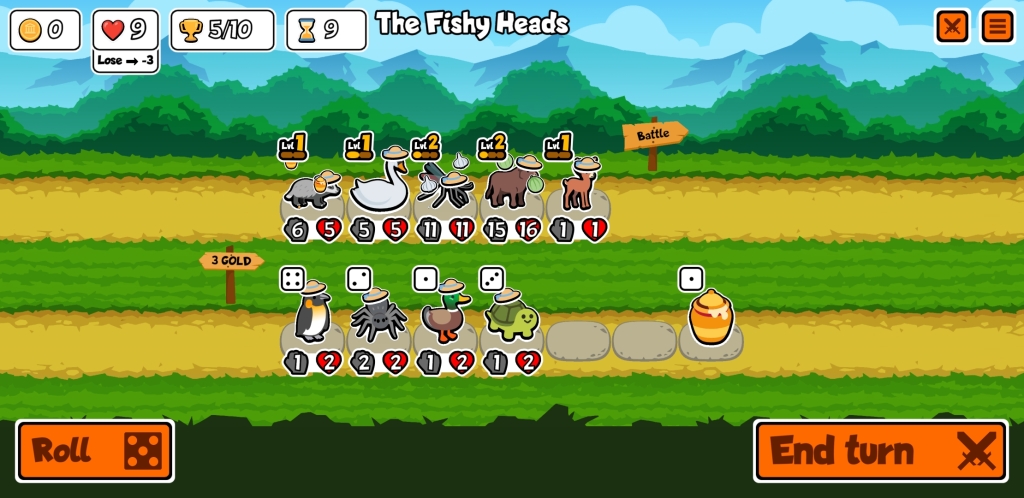
I never got into the auto battler genre, nothing about it really piqued my interest, until Super Auto Pets. At first, it was the cute animals–just emojis ripped from the Android keyboard–but once I started playing, I discovered a deceptively simple game with a wealth of depth and strategy. All the different animal units have different effects from buffing themselves or others, providing more gold to spend in the shop, or copying other units’ abilities. Learning these effects and how they interact with others has all the fun of a deck building game, but runs are significantly shorter, making it a great pick up and play game. I don’t spend hours playing Super Auto Pets at a time, but I have been putting a few runs in here and there daily for the past few months. The reason it is at the bottom of the list is only because it is still in beta, with patches that change up the meta coming out pretty consistently, so who knows where the game will be a few months or years from now.
4) Monster Hunter Rise

As noted before on this very blog, I am a big fan of the Monster Hunter series. So I was excited when Monster Hunter Rise was announced for the Switch. It looked like a great blend of the games from the series I played on the 3DS and the newer World formula. And that is exactly what the game was. Visually, Rise looks like a slightly more polished Generations, but it has the quality of life changes that were introduced in World–weapon upgrade trees, notes on monsters’ weaknesses and drops in game, seamless environments. The combat is as deep as ever, the monsters as big, imposing, and creative as ever, and the weird goofiness of characters is as charming as ever. But with the addition of the wire bugs and Palimutes, the game is more fast-paced and kinetic than any other game in the series. It’s low on the list because I only ended up putting around 30 hours into it overall, about a 3rd of what I put into World and Generations each.

3) Resident Evil Village

What do you get when you mix together RE4 and RE7? Well, you get Resident Evil Village. The game takes the 1st person perspective, characters, and plot from RE7 and adds in the more combat focus, weapon upgrades, European village setting, and more camp tone of RE4. And it works surprisingly well. The pacing is fantastic with combat being fast and frantic, spookier moments being effective, and there being enough quiet moments between them that it doesn’t get repetitive. While I like Village more than RE7, I think the more isolated, focused setting of the Baker’s home worked much better. Village swings from gothic castle to Lovecraftian flooded village to machine zombie factory. It can feel like you are playing several, small games as opposed to one cohesive whole at times. But Village also has Lady Dimitrescu, a shining beacon of goth waifuness that brought the country together at a time where we feel more divided than ever. And I think we can all agree that’s a good thing.

2) Metroid Dread

The fact this game even came out is crazy since it’s been hinted at since the DS era. The fact that Metroid Dread came out and is great is even crazier. I’ve played a good chunk of Metroid games at this point, and Dread is easily my favorite now. A lot of this has to do with the controls because Samus has never felt so good to move around with. Exploration, item hunting, and secret finding is as satisfying as ever, but this game takes the bosses fights to a whole other level. I love a game with good boss fights–ones with clear but tricky attack patterns to learn, ones with unique ways of fighting them without feeling to gimmicky, ones where you know the next hour or two in the game will be just on this boss, learning its ins and outs, until you finally beat it–and Metroid Dread has some great, tough, and sticky boss fights. The game is pretty linear when you take a broad look at it, with the developers cleverly using points of no returns and transporters to guide the player in the right direction, but it’s this mix of exploration and guidance that makes Dread the most accessible game in the Metroid series.

1) The Binding of Isaac: Repentance

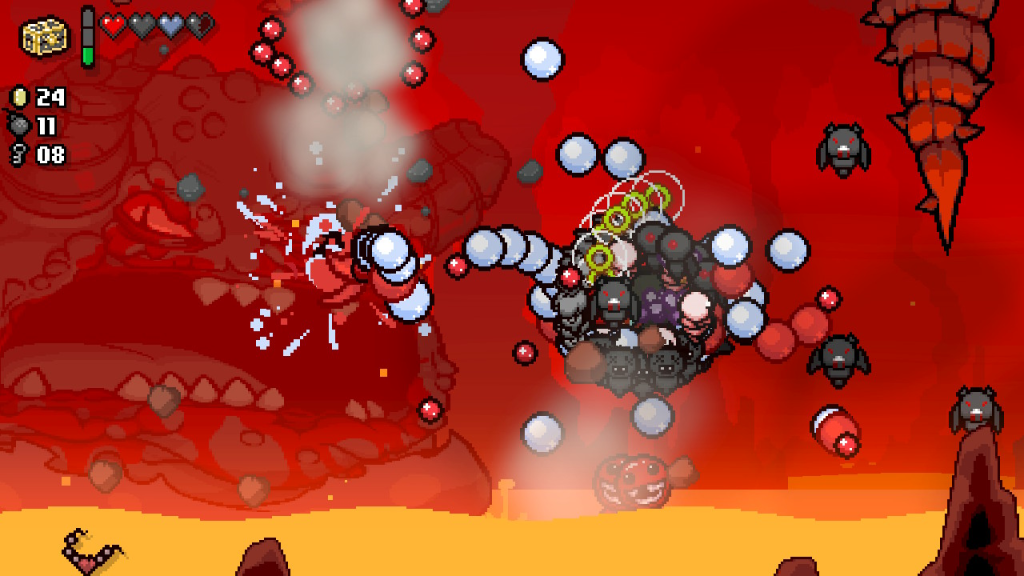
I agonized a bit on whether or not I was going to put Repentance on this list since it’s only an expansion of a game. But I decided it not only belonged on the list, but also at the top spot, for a few reasons. Mainly, Repentance more than doubles the content in The Binding of Isaac–two new alternate routes, 14 new characters, and a lot of new items, trinkets, cards, enemies, etc. Repentance could easily have been a standalone game. There is also what this expansion means to Isaac as a game and me as a player. It is the final expansion, the last hurrah of my favorite game, the culmination of years of waiting and excitement, and the last time I will get to honor it in a list like this. Most importantly, though, Repentance is the only game I played this year that I want to keep playing. Once I finished Resident Evil Village and Metroid Dread, I was done, but I am still putting time into Repentance pretty much daily. Some days, it’s all I play and I play it for hours. After the shakiness with Afterbirth+, Repentance have brought The Binding of Isaac to the best place it’s been in years, possibly ever, and it is easily my favorite game of 2021.
Metroid Prime – Critical Miss #31

In a Phazon Supernova

I’m very excited about the upcoming release of Metroid Dread in October. It’s been over ten years since the last completely new Metroid game, and over 20 years since an all new 2D game in the series. While I have only played Super Metroid before now, there is another game in the series that gets bought up as being of equal, or possibly even greater, quality than the game: Metroid Prime. Released on the Gamecube in 2002, Prime was met with no small amount of ire from the series’ fans. It was the first 3D game under the Metroid name, developed by a western studio, and it changed the traditional 3rd person gameplay perspective into a 1st person shooter. Fans wailed that it was a true Metroid game before they had even played it; they had to because, once they did play Prime, they realized what an interesting, unique, and true take on the series the developers at Retro Studios had made. 

It always blows my mind how good some games on the Gamecube look and Metroid Prime is not an exception. There are games with strong art styles like Windwaker and Mario Sunshine that will always look good, but even more realistic styles like Resident Evil 4 and the remake of the first game look practically next gen. Metroid Prime looks incredible for the console it released on with its clean textures and great models for the variety of enemies. The game would not look out of place as a PS3 or 360 game. It’s disappointing then when the GUI and the different visors cloud up the graphics. The transparent read out of Samus’s helmet is something you get used to and learn to look past, but it sometimes makes enemies to your side hard to spot or read how many missiles are left in your arsenal. The X-Ray and Thermal visors can be fun and are more often than not utilized well, but they just cover the screen in a homogenized filter. 

While the graphics are great, the music and story I was more lukewarm on. While the music is good, and hearing remixes of Super Metroid tracks in areas like the Magmoor Caverns reminded me that I love that game’s soundtrack, it tends to be more atmospheric in nature and something I can’t bring to mind easily. I only have a basic knowledge of the story happening in Metroid Prime—something about Space Pirates trying to weaponize Metroids again, but this time with a new element called Phazon. Most of the story is fleshed out through pieces of lore and information you can scan from items in the world. It’s great when you get a tip on how to beat an enemy, but having to stop the game to scan things like computer screens to learn about the Space Pirates plans is not very engaging and completely breaks the pacing of the game. Which is disappointing because, at its bones, Metroid Prime is a fun game to play. 

As the first game in the series to be in 3D, Metroid Prime had to translate the gameplay of the series into a completely new style; not only did it have to work around the z-axis, but it was also a FPS. The developers managed the transition beautifully though with Prime having the same core gameplay loop of its earlier, 2D siblings. The player explores the world of Tallon IV to find power-ups and abilities that unlock new areas to explore. The feeling of isolation the series is known for comes across well in Prime too. It’s just you against the world while you fight enemies, scour for secrets, and solve puzzles. Prime empathizes puzzles a little more than Super Metroid, but not by much. The world never feels like a Zelda dungeon to explore with that series love of puzzles, but you will come across many rooms on Tallon IV that take some clever thinking to pass through. 

Even though Prime is a 1st person game, there are moments when you play in 3rd person. These are when using one of Samus’s staple abilities: the Morph Ball. I thought the transition of Samus emerging from the ball and the camera going into the back of her helmet would get tedious, but it never did. The switch is so quick and feels so natural, that I never minded it. The Morph Ball itself is fast and smooth to control leading to great feeling sections and puzzles to solve with the technique. It is mostly used to explore the world, but can be used in combat when Metroid attached itself to you and needs to be blown up by a bomb or as a quick way to gain some distance from a large boss.

The hardest hurdle to overcome when looking at a FPS from the Gamecube era is the controls. Nowadays, FPS controls are pretty universal: move with the left stick, aim with the right stick, fire with the right trigger. Things don’t seem to have been as clarified back in the 6th generation of consoles. Metroid Prime’s controls feel very clunky, and downright alien, to someone who is used to modern FPS controls. The left stick is used both to move Samus and aim your cannon, the big green A button is used to fire, and the C-stick (which would be the right stick on a more traditional, non-Nintendo controller) is used to swap between different cannon types. The game lets you lock onto enemies by holding down the left trigger, but they have to be near the center of the screen making flying enemies or ones close to the ground difficult to shoot. If you want to aim independently of moving your character, you hold down the right trigger, but even this feels strange since the aiming reticle constantly fights with you to return to the center of the screen. I did get used to these bizarre controls after a while, but the first few hours in the game were a mess of fighting with muscle memory. 

Once you have a grip on the controls though, the combat in Metroid Prime is very satisfying. Swapping between all your different cannons and visors towards the end of the game can get tedious—and the tiny d-pad on the Gamecube controller meant I often switched to the wrong visor in the heat of battle—but it just feels good charging up beams, blasting missiles, and strafing around enemies. There is a good variety of enemies to fight and all have different methods for disposing of, keeping combat engaging. The bosses are all unique and interesting to fight too; all with gimmicks or little puzzles that need to be figured out in order to beat them and are all the right balance between tough and fun to fight. This all leads to an excellent difficulty curve throughout the game. I never felt over or underpowered while playing. Even when revisiting early areas with end game weapons because new, tougher enemies were now patrolling them. 

You are alone on the world of Tallon IV and it’s up to you to find the necessary upgrades in order to overcome the challenges the alien planet poses. Like any other Metroid game, Prime is a deeply explorative experience and exploration is only rewarding if the world you adventure through is interesting. I’ve mentioned my problems with how the story is told in the game, but I’ve always been a more mechanics driven player than a story driven one. What I find appealing in a game that asks you to explore the world is interesting level design and rewards to find. Prime is not bad in this sense at all, but I found the world to be lacking compared to other Metroidvania games and even Prime’s older, 16-bit sibling, Super Metroid. The world of Tallon IV just seems small to me, which is pretty silly because the size of the world is huge, but so much of it is just rooms connected by winding hallways that it starts to feel repetitive. There are tons of secrets to find—more so than I even found since I ended the game with only about half of the missile expansions—but something about the 2D sprite work of Super Metroid made looking for the secrets feel more organic and satisfying. The level design is solid throughout, with clever ways the room layouts subtly guide players to where they need to go, but there are few places where the biomes of the world intersect or connect, usually by elevators. This means you end up travelling the same routes over and over again while backtracking since the map is tied up in only a handful of choke points.

And I said the dreaded word; the dirty word in video games that often turn people off from a game or a series or an entire genre: backtracking. I’ve never really had a problem with backtracking in games as long as there was still something to do on the way, like fighting the new enemies in old areas in Prime, and it was done for a good reason. Backtracking through Metal Gear Solid for the keycard puzzle was horrendous while backtracking in the first half of Dark Souls made me appreciate the level design so much more. There’s a lot of back and forth across Tallon IV in Metroid Prime, but it never bothered me for the most part because I knew it was leading to a new area to explore, a new upgrade to play with, or a new boss to fight. But then came the Artifacts.

After you have collected all the necessary upgrades, you will still have to unlock the final area of the game by finding twelve Chozo Artifacts hidden around the world. There is an area near the beginning of the game where you can get hints where all the Artifacts are by scanning pillars. This helps to some extent, but I would suggest using a guide as I did for this last scavenger hunt. I had only found four or five Artifacts by the time I had collected everything and that was with pretty thorough searching. Turns out, you need the X-Ray visor and the Plasma Beam—pretty much the last two upgrades you will find—to get nearly half of the Artifacts in the game. It seems strange for a game that empathizes exploration and finding secrets that so many of these are required to reach the end game before you can even think about looking for them. It would be so much more rewarding if they could be found by clever, curious or even knowledgeable players throughout their regular playthrough. If you use a guide and just write down the rooms they are in, the path to the Artifacts are easy to map out and the puzzles are satisfying to solve, but there’s no denying that the pacing of the game suffers due to this choice. It’s not quite putting a stick in the spokes of a bike, but more like a pleasant ride down a quiet road only to hit a mile of wet concrete to slog through.

Once I was in the space boots of Samus Aran, once I was exploring the alien world of Tallon IV, once I was blasting away monsters with the Charge Beam, I was in. Metroid Prime is a great game, no doubt, and I think I may even like it more than Super Metroid at this point. It is a very strongly designed, atmospheric, and engaging game to play. Now I see why people are clamoring for Metroid Prime4 and why everyone is begging Nintendo for the Prime trilogy to be ported to the Switch. With Dread releasing in a few weeks, the future’s looking bright for Samus. But is it the brightly twinkling stars she is heading for? Or a supernova of a sun just before it collapses into a black hole?