The Legend of Zelda: Skyward Sword – Critical Miss #33

Flying High, Falling Fast

I’ve said before that I’m a more casual fan of the Legend of Zelda series. I’ve liked every game I’ve played from the illustrious series, but they are not in my favorite games of all time. However, I do want to play through all games in the series, though, both the good and the bad. That brings us to Skyward Sword. Released for the Wii in 2011, this is one of the most divisive games under Zelda’s name. The contrarian in me went into the game wanting to love it. While there are a lot of good things in it, the game has a counter to everything there is to like. This is one of the most mixed experiences I’ve had with a game in a long time.

One of the best aspects of Skyward Sword is the art style. It is bright, colorful, but not super cartoony. It’s like a good mix of the more realistic proportions of Ocarina of Time or Majora’s Mask and the colors and cell-shading of Wind Waker; it fits a Zelda game perfectly. The characters in the game are all bold, goofy, and memorable. Their charm instantly made me more interested and care about them, especially Zelda and Link themselves. Never before has their relationship been so fleshed out. They are best friends with some romantic feeling growing inside them. It gives Link a more personal reason for risking his life to save Zelda and gives the player strong context for the adventure. The character Grouse even has a nice character arc throughout the game, starting as a mere high school bully and turning into an honorable fellow trying to help Link however he can. The world of Skyward Sword is a pleasant and beautiful one to exist in, but it would be nice if there were more things to do in it.

A thick layer of clouds separates the two parts of Skyward Sword’s world: the surface and the sky. The surface is divided into the Faron Woods, Lanayru Desert, and Eldin Volcano. These are the areas where you will spend most of your time looking for and exploring dungeons, but in between dungeons you will have to return to the sky. To put it bluntly, the sky is too big, too empty, and traveling across it feels way too slow. Since you can see everything in the distance, travelling to a destination is a matter of pointing your bird at it and watching it sluggishly get closer. The first few times I flew in the game, it felt exhilarating until I realized how little nuisance is needed to control your Loftwing. Besides Goddess Chests that appear in the sky, there’s nothing to find in it. There are only a few memorable islands worth exploring in the sea of cloud including Skyloft, the main hub, the rest are just floating rocks that neither pique interest or act as an obstacle to avoid.

So flying above the clouds is not terribly engaging or fun, but what about below them?  Since there are only three main areas you will explore below the clouds, the world of Skyward Sword feels rather small, especially since you will revisit these areas at least three times each. Areas sometimes change, like the Faron Woods being flooded at a point, or there will be all new areas to explore for a dungeon entrance, but it doesn’t help the game world feel any less small or tedious. Often to find a dungeon, you will have to use Fi’s dowsing abilities to find things. This process gets very tiresome and repetitive after the first few times. Same with the strange stealth sections when doing a Goddess Challenge to get a new piece of equipment. There are even times the game makes you run through the entirety of a section you’ve already played in order to progress—most egregious of this would be the 3rd trip to Eldin Volcano where you lose all your items and have to sneak around enemies to get them back. Once you get through all the tedium and nonsense and actually get inside a dungeon, though, is when the level design of Skyward Sword starts to shine.

Dungeons are always a highlight of any Zelda game because they blend the gameplay loops of exploration, puzzle solving, and combat. Skyward Sword is no different since the dungeons are probably the best part of the game. Each has unique gimmicks and different visuals, despite taking place in similar areas. From using special stones to shift time in certain areas, lowering and raising a central statue, and dropping water in lava to create platforms, all the dungeons offer something new and interesting to play with. These are probably the most balanced dungeons in series too, with puzzles being tricky and clever, but never too obtuse to feel unfair. The loop of finding a new item in a dungeon, discovering ways that new tool opens new paths and lead to the boss, and using the item against that boss is as strong as ever. The bosses themselves are also a blast. Blowing sand away to reveal Moldarach, pulling the arms off of Koloktos to use its own weapons against it, and pushing Scaldera down a ramp to weaken it; every boss is interesting and fun to fight. That is, when the game is not reusing bosses, which it does a lot. Ghirahim and Demise will both have to be fought multiple times throughout the game. While Demise is always a pretty lame fight, Ghirahim has the nugget of a great fight in him, but it hindered by the games controls.

Being released on the Nintendo Wii, Skyward Sword makes heavy use of motion controls. This is why opinions on the game are so mixed amongst Zelda fans. I played the recent HD remaster on the Switch where it can be played without these motion controls. Instead of waving your arm for a sword slash, you just flick the right stick; instead of thrusting the nunchuck forward, you click in the left stick for a shield parry; and instead of aiming the bow or slingshot with the pointer, the right stick is again used. These controls work about as well as they can, but they still feel unresponsive and clunky. This is especially true when using or selecting items, where the difference between clicking the right trigger and holding it down is seemingly a matter of microseconds, causing the item selection wheel to pop up in the heat of battle when you were trying to aim your bow at an enemy. These controls have a trickle-down effect on the rest of the game, adding to the sense of tedium and clunkiness that is present throughout, but especially in combat.

Much like flying around the overworld, combat in Skyward Sword is something that starts off feeling thrilling until fatigue quickly sets in. Since you can attack in eight directions at any time, you have more freedom than in any other Zelda game. Enemies will block your attacks and this encourages you to feign to create openings to hit them. This helps every enemy encounter feel unique, challenging, and engaging since you are not just waiting for an opening and spamming the attack button. That would be great if spamming the attack button wasn’t more often than not the easiest way to break an enemy’s guard. Even Ghirahim, whose whole deal is he will grab your sword if you don’t feign attacks, goes down pretty easily if you just spam sword swings in different directions. It is a shame because I can see what the developers were trying to do, to make every fight require attention and skill and patience to beat, but it’s not fleshed out enough, the enemy AI not smart enough, and the controls not refined enough to require players to get good at it to survive. I probably died more times in Skyward Sword than any other Zelda game, but it always felt like the result of poor controls rather than any lack of skill.

Like I said at the beginning, playing through Skyward Sword is the most mixed experience I’ve had with a game in a long time. I didn’t hate the game, there is a lot of fun that can be found in it, but for everything good the game has, there is something negative that hampers it. It was ambitious to make a game that relies almost entirely on motion controls, but I can see a more enjoyable game buried here that would be alright if it had standard Zelda controls and mechanics. Even that wouldn’t have fixed everything with the game though. The world design and progression throughout the game is just tedious and slow and extremely bloated. The search for the Goddess Flames or the Triforce, could have easily been cut and the game wouldn’t have lost anything important. But I still had fun during parts of the game. Skyward Sword is still a Zelda game and still rather good as far as AAA games go, but it is the Zelda game that I have the least interest in revisiting anytime in the future. I played through it once and that’s enough for me. 

Metroid Prime – Critical Miss #31

In a Phazon Supernova

I’m very excited about the upcoming release of Metroid Dread in October. It’s been over ten years since the last completely new Metroid game, and over 20 years since an all new 2D game in the series. While I have only played Super Metroid before now, there is another game in the series that gets bought up as being of equal, or possibly even greater, quality than the game: Metroid Prime. Released on the Gamecube in 2002, Prime was met with no small amount of ire from the series’ fans. It was the first 3D game under the Metroid name, developed by a western studio, and it changed the traditional 3rd person gameplay perspective into a 1st person shooter. Fans wailed that it was a true Metroid game before they had even played it; they had to because, once they did play Prime, they realized what an interesting, unique, and true take on the series the developers at Retro Studios had made. 

It always blows my mind how good some games on the Gamecube look and Metroid Prime is not an exception. There are games with strong art styles like Windwaker and Mario Sunshine that will always look good, but even more realistic styles like Resident Evil 4 and the remake of the first game look practically next gen. Metroid Prime looks incredible for the console it released on with its clean textures and great models for the variety of enemies. The game would not look out of place as a PS3 or 360 game. It’s disappointing then when the GUI and the different visors cloud up the graphics. The transparent read out of Samus’s helmet is something you get used to and learn to look past, but it sometimes makes enemies to your side hard to spot or read how many missiles are left in your arsenal. The X-Ray and Thermal visors can be fun and are more often than not utilized well, but they just cover the screen in a homogenized filter. 

While the graphics are great, the music and story I was more lukewarm on. While the music is good, and hearing remixes of Super Metroid tracks in areas like the Magmoor Caverns reminded me that I love that game’s soundtrack, it tends to be more atmospheric in nature and something I can’t bring to mind easily. I only have a basic knowledge of the story happening in Metroid Prime—something about Space Pirates trying to weaponize Metroids again, but this time with a new element called Phazon. Most of the story is fleshed out through pieces of lore and information you can scan from items in the world. It’s great when you get a tip on how to beat an enemy, but having to stop the game to scan things like computer screens to learn about the Space Pirates plans is not very engaging and completely breaks the pacing of the game. Which is disappointing because, at its bones, Metroid Prime is a fun game to play. 

As the first game in the series to be in 3D, Metroid Prime had to translate the gameplay of the series into a completely new style; not only did it have to work around the z-axis, but it was also a FPS. The developers managed the transition beautifully though with Prime having the same core gameplay loop of its earlier, 2D siblings. The player explores the world of Tallon IV to find power-ups and abilities that unlock new areas to explore. The feeling of isolation the series is known for comes across well in Prime too. It’s just you against the world while you fight enemies, scour for secrets, and solve puzzles. Prime empathizes puzzles a little more than Super Metroid, but not by much. The world never feels like a Zelda dungeon to explore with that series love of puzzles, but you will come across many rooms on Tallon IV that take some clever thinking to pass through. 

Even though Prime is a 1st person game, there are moments when you play in 3rd person. These are when using one of Samus’s staple abilities: the Morph Ball. I thought the transition of Samus emerging from the ball and the camera going into the back of her helmet would get tedious, but it never did. The switch is so quick and feels so natural, that I never minded it. The Morph Ball itself is fast and smooth to control leading to great feeling sections and puzzles to solve with the technique. It is mostly used to explore the world, but can be used in combat when Metroid attached itself to you and needs to be blown up by a bomb or as a quick way to gain some distance from a large boss.

The hardest hurdle to overcome when looking at a FPS from the Gamecube era is the controls. Nowadays, FPS controls are pretty universal: move with the left stick, aim with the right stick, fire with the right trigger. Things don’t seem to have been as clarified back in the 6th generation of consoles. Metroid Prime’s controls feel very clunky, and downright alien, to someone who is used to modern FPS controls. The left stick is used both to move Samus and aim your cannon, the big green A button is used to fire, and the C-stick (which would be the right stick on a more traditional, non-Nintendo controller) is used to swap between different cannon types. The game lets you lock onto enemies by holding down the left trigger, but they have to be near the center of the screen making flying enemies or ones close to the ground difficult to shoot. If you want to aim independently of moving your character, you hold down the right trigger, but even this feels strange since the aiming reticle constantly fights with you to return to the center of the screen. I did get used to these bizarre controls after a while, but the first few hours in the game were a mess of fighting with muscle memory. 

Once you have a grip on the controls though, the combat in Metroid Prime is very satisfying. Swapping between all your different cannons and visors towards the end of the game can get tedious—and the tiny d-pad on the Gamecube controller meant I often switched to the wrong visor in the heat of battle—but it just feels good charging up beams, blasting missiles, and strafing around enemies. There is a good variety of enemies to fight and all have different methods for disposing of, keeping combat engaging. The bosses are all unique and interesting to fight too; all with gimmicks or little puzzles that need to be figured out in order to beat them and are all the right balance between tough and fun to fight. This all leads to an excellent difficulty curve throughout the game. I never felt over or underpowered while playing. Even when revisiting early areas with end game weapons because new, tougher enemies were now patrolling them. 

You are alone on the world of Tallon IV and it’s up to you to find the necessary upgrades in order to overcome the challenges the alien planet poses. Like any other Metroid game, Prime is a deeply explorative experience and exploration is only rewarding if the world you adventure through is interesting. I’ve mentioned my problems with how the story is told in the game, but I’ve always been a more mechanics driven player than a story driven one. What I find appealing in a game that asks you to explore the world is interesting level design and rewards to find. Prime is not bad in this sense at all, but I found the world to be lacking compared to other Metroidvania games and even Prime’s older, 16-bit sibling, Super Metroid. The world of Tallon IV just seems small to me, which is pretty silly because the size of the world is huge, but so much of it is just rooms connected by winding hallways that it starts to feel repetitive. There are tons of secrets to find—more so than I even found since I ended the game with only about half of the missile expansions—but something about the 2D sprite work of Super Metroid made looking for the secrets feel more organic and satisfying. The level design is solid throughout, with clever ways the room layouts subtly guide players to where they need to go, but there are few places where the biomes of the world intersect or connect, usually by elevators. This means you end up travelling the same routes over and over again while backtracking since the map is tied up in only a handful of choke points.

And I said the dreaded word; the dirty word in video games that often turn people off from a game or a series or an entire genre: backtracking. I’ve never really had a problem with backtracking in games as long as there was still something to do on the way, like fighting the new enemies in old areas in Prime, and it was done for a good reason. Backtracking through Metal Gear Solid for the keycard puzzle was horrendous while backtracking in the first half of Dark Souls made me appreciate the level design so much more. There’s a lot of back and forth across Tallon IV in Metroid Prime, but it never bothered me for the most part because I knew it was leading to a new area to explore, a new upgrade to play with, or a new boss to fight. But then came the Artifacts.

After you have collected all the necessary upgrades, you will still have to unlock the final area of the game by finding twelve Chozo Artifacts hidden around the world. There is an area near the beginning of the game where you can get hints where all the Artifacts are by scanning pillars. This helps to some extent, but I would suggest using a guide as I did for this last scavenger hunt. I had only found four or five Artifacts by the time I had collected everything and that was with pretty thorough searching. Turns out, you need the X-Ray visor and the Plasma Beam—pretty much the last two upgrades you will find—to get nearly half of the Artifacts in the game. It seems strange for a game that empathizes exploration and finding secrets that so many of these are required to reach the end game before you can even think about looking for them. It would be so much more rewarding if they could be found by clever, curious or even knowledgeable players throughout their regular playthrough. If you use a guide and just write down the rooms they are in, the path to the Artifacts are easy to map out and the puzzles are satisfying to solve, but there’s no denying that the pacing of the game suffers due to this choice. It’s not quite putting a stick in the spokes of a bike, but more like a pleasant ride down a quiet road only to hit a mile of wet concrete to slog through.

Once I was in the space boots of Samus Aran, once I was exploring the alien world of Tallon IV, once I was blasting away monsters with the Charge Beam, I was in. Metroid Prime is a great game, no doubt, and I think I may even like it more than Super Metroid at this point. It is a very strongly designed, atmospheric, and engaging game to play. Now I see why people are clamoring for Metroid Prime4 and why everyone is begging Nintendo for the Prime trilogy to be ported to the Switch. With Dread releasing in a few weeks, the future’s looking bright for Samus. But is it the brightly twinkling stars she is heading for? Or a supernova of a sun just before it collapses into a black hole?

Captain Toad: Treasure Tracker & Diorama Levels

The Super Mario franchise has to have some of the most charming characters of any video game franchise. I’m not even talking about Mario, Bowser, or Peach either; characters like Boos, Wigglers, Monty Moles, and Cheep Cheeps are all beloved by me. They are all incredibly cute and show personality simply through strong character design and a few set actions. Another character I’ve grown to love is Captain Toad, but it wasn’t until recently when I played his very own game, Captain Toad: Treasure Tracker, that I saw how great the character and the world he inhabits could be. With a strong, clear focus of using dioramas as inspiration, Treasure Tracker displays not only some of the strongest level design in the Mario franchise, but some of it’s most charming.

Captain Toad as a character was introduced in Super Mario Galaxy as an adventure seeking little Toad that would appear in levels with his trademark mushroom-shaped spaceship. The same ship and character also appear periodically in Super Mario Odyssey, but in either game, the character doesn’t amount to more than a way to get an extra life or collectible. Captain Toad was first playable between those two games in Super Mario 3D World where you control the little adventurer through small, self-contained levels to collect Green Stars. While these levels were mostly just alright in 3D World, being short, easy, but ultimately fun mini interludes between the main levels, they set the foundation for Captain Toad’s gameplay and level design that was expanded greatly upon in his own game.

The levels in Captain Toad: Treasure Tracker  were inspired by dioramas and that’s exactly what they feel like—standard Mario levels that have been struck down miniature scale. They are very small and confined, but have the colorful art style, well-thought- out design, and incredible amount of polish present in larger Mario levels. The benefit of having levels so small is that they feel meticulously created. Everything in the levels is necessary—there is absolutely no wasted space in them. Aside from the critical path to the end of the level, all side paths hold secrets ranging from Golden Mushrooms for the bonus objectives to just a few invisible coins to collect. Even though the levels are tiny, they always feel rewarding to explore since the game constantly rewards the player. The levels even tend to feel larger than they actually are thanks to clever uses of the camera and level design.

Captain Toad: Treasure Tracker is played in the third person perspective, but the camera does not follow Captain Toad as he explores the level under his feet. Instead, moving the camera rotates it around the level itself, using the character as a sort of anchor, making sure the player can’t see too much above, below, or across the level from them until they reach that part. When a level starts, you can see most everything there is to see: the character rearing for adventure, the Power Star that acts as the end of the level, any and all level gimmicks or mechanics you will have to puzzle out—all the important information is present at a glance. But what the level hides in the spaces the camera can’t see immediately are the most interesting. Things like paths throughout the level, little caves to find entrance into, bonus diamonds or collectibles, pipes that take you to hidden parts of the level. These help a level feel like it’s unfolding around you as you guide the Toad throughout it and move the camera around to look into every nook and cranny present. What starts out looking like a simple, straightforward level soon balloons to a little puzzle box of branches to explore and secrets to discover.

There are over 50 levels in Treasure Tracker and—even though there are repeated level themes like grassy areas, desert ruins, little beach sides, and spooky haunted mansions—there are an abundance of level gimmicks and new mechanics being thrown at the player in every new level. This helps alleviate some of the repetition that comes from the game’s insistence on playing each level multiple times for 100% completion. The gimmicks usually revolve around moving parts of the level: wheels that rotating bridges, towers, or entire chunks of the ground, glowing blocks that can be shifted up, down, left, or right with a single touch, and some built-in mechanics like a level themed after a wind-up box that have each side of the level shifting up and down and a late game level that is just a cross of boxes the rotate around in a circle. These level gimmicks not only provide puzzles to solve and new ways to reach the Power Star, but often hide secrets within the moving parts. This is extremely common with the Pixel Toad Hide-and-Seek mode with the sneaky little Toad will be hiding behind a chunk of the level that must be moved first to see, but there are other secrets hidden within these folds of the levels. Often, if a diamond can be seen, but it is not immediately obvious how to get to it, there will be a hidden door somewhere behind a piece of shifting level. This again helps the levels feel bigger than they are due to every part of the level being used to encourage exploration.

The small, diorama levels adds another brilliant aspect to Captain Toad: Treasure Tracker, but it is the hardest aspect to explain due to its extremely subject nature. This aspect is the charm of the game. It all comes down to the art style. The highly polished and colorful style makes the game feel like a Saturday morning cartoon, especially when paired with the upbeat and catchy music. Super Mario 3D World has a similar art style, but it seems like the artists just had much more opportunity to fine-tune each and every level in Captain Toad: Treasure Tracker simply due to their smaller nature. The world in the game is just a very cheerful, pleasant, and cute one to immerse yourself in. Captain Toad and Toadette themselves also help to add to the charm of their game through the determination they show in trying to reunite with each other and the excitement they display when collecting another treasured Power Star. Each level is so enjoyable to explore and cute to see, that you will soon find yourself unable to put the game down just by sheer desire to see what comes in the next level. 

It’s telling how well the diorama inspiration aids the design and overall fun of Captain Toad when you look at the levels that stray away from that focus. Some levels, like the boss fights, mine cart levels, and levels that just feel overly large, seem to ignore the diorama structure of the others and they feel much weaker for them. These larger levels feel too long to complete—especially when trying to 100% the game requires multiple playthroughs of every level. They are not poorly designed, however, just more tedious and tiresome to complete.

Basing the levels on dioramas not only provides a clear focal point and through line throughout Captain Toad: Treasure Tracker, but also helps limit any excess commonly found in games nowadays. With keeping levels small, confined, and focused, the developers were able to make the most out of every level’s space and mechanics. Every level in the game feels so finely tuned, so meticulously crafted, and polished to a brilliant shine that it works as an example of the benefit of limiting a project’s scope, almost like a counterpoint to the massive, bloated open-world games that have taken over AAA game. Much like a diorama or miniature, if you have a very small space to create in, you better make sure it is the most detailed creation you can make.

Pokémon Snap: Critical Miss #26

Photo by Kimberly AJ. Found at pokemon.fandom.com

Take Only Pictures, Leave Only Pokémon

I’ve discussed my love for the Pokémon franchise before, both in my Nuzlocke post and my review of Pokémon Platinum. While I’ve been playing the main series since childhood, I’ve hardly spent any time with any spinoff game. Sure, I played a little bit of Pokémon Stadium at friends’ houses as a kid and I dabbled in Pokémon Conquest for a short time, but I’ve never played a Mystery Dungeon game, XD Gale of Darkness, or Pokken. Nintendo is about to give fans a new Pokémon Snap game, something they’ve been clammering for since the original released on the N64 in 1999. I thought now would be a great time to play the game and see what makes it one of the most beloved and well-remembered spinoff games in the Pokémon series. 

Although you can name the character at the beginning of the game, canonically his name is Todd Snap. You play as him after he has an encounter with a rare Pokémon and Prof. Oak asks him to help him with research by taking pictures of wild Pokémon. You travel across Pokémon Island where Pokémon roam wild and carefree. The island reminds me of Monster Island from the sillier of the Shōwa Era of Godzilla movies. Despite the game taking place on a single island, there are many different environments to see from scenic beaches to fiery volcanoes, dank caves to lush jungles. 

Photo by Wagnike2. Found at pokemon.fandom.com

The visuals and music are always colorful, upbeat, and cheery, creating a very peaceful and pleasant experience. The graphics have aged just fine in the over twenty years since Snap’s release with the highlight being the Pokémon models themselves. Pokémon Snap was the first time players got to see Pokémon in 3D and, while the models of the creature suffer from the usual N64 blockiness, they are all charming and well animated in the game. One of the biggest appeals to Snap is just seeing Pokémon in their natural habits, enjoying their days, getting into mischief, and just living their best Pokémon lives. It’s something you just couldn’t portray effectively on the original Gameboy games and it’s an aspect of Pokémon that no other game has really tried since. The closest we’ve seen to a return of watching Pokémon roam free is the Wild Area in Sword and Shield, but the frame rate issue and constant pop-in never made that feel organic. Seeing these creatures frolic through their environments adds to the feeling of Snap being a very peaceful game. And that’s before you even account for the gameplay.

Snap is different from most other Pokémon games because you never battle any Pokémon and the only capturing of them you do is with your camera lens. It’s a very “leave only footprints” mentality—well, besides the tracks Prof. Oak apparently left all over the island for the Zero-One, the tracked vehicle you used to navigate the island. Pokémon Snap is a rail shooter similar to a House of the Dead or a Time Crisis, only with a camera instead of a gun. Pokémon will run around, hide, fly, and perform silly acts and it’s up to you to find the best time to take pictures for Prof. Oak to rate.

Oak’s rating system is a fickle thing. It’s based on the size of the Pokémon, the pose they are making, how centered they are in the frame, and sometimes if they are doing a certain action. The guidelines are simple enough for someone like me, with pretty much no skill or knowledge of visual art, to understand, but it seems a bit inconsistent. When comparing two pictures of the same Pokémon, I swear sometimes the one I honestly thought was better got the lower score. It’s not really a big problem though since the game encourages you to replay levels multiple times so there are always new chances to get better photos of Pokémon. The score in general is mostly used as a way to progress through the game.

Photo by Wagnike2. Found at pokemon.fandom.com

Reaching a certain score on your Pokémon Report will unlock new levels to play and new items to use in those levels. There is an apple for luring Pokémon closer to you or other areas, the pester balls that stun Pokémon with noxious gas, and the Pokéflute whose medley inspires Pokémon to dance and perform actions like Picachu using Thundershock. Getting these new items are always fun because they make you look at already completed levels in new ways. Often, you will see Pokémon hiding amongst the environments, but there will be no way to get a good photo of them. If you lure them close with an apple, it becomes possible. The beach stage has a sleeping Snolax you need to wake up with the Pokéflute for the best photo and the pester balls are great for stopping quick Pokémon long enough to take a picture or draw out Pokémon from their hiding places. While levels can sometimes get dull due to being stuck to one track and the Pokémon acting the same way every time, leading to having to mesmerize the levels and the best times to capture a Pokémon’s good side, there are enough secrets to discover in Pokémon Snap to keep it engaging.

From opening up new levels to performing certain tasks to have Pokémon evolve to just finding hidden Pokémon, there are a lot of secrets to discover in Pokémon Snap. It feels a lot like Star Fox 64 in a way with both games being rail shooters and both having secret requirements to unlock new stuff in them. However, Pokémon Snap is much better at informing the player on how to unlock its secrets with clues in the environments. For example: there’s a carving on the wall of the tunnel level showing a large egg with lightning bolts and musical notes over it. So when you see that egg in the level, you know to lure the nearby Picachu over to it and play the Pokéflute. When Picachu uses Thundershock, the egg will hatch into a glittering Zapdos. 

Photo by Wagnike2. Found at pokemon.fandom.com

I purposely played through as much as Pokémon Snap without looking up any secrets and it was very satisfying discovering things on my own. However, I feel there are some things in the game that an average player would never think to do on their own. Best example of this would be discovering Gyrados. This requires in the valley level knocking a Magicarp up a slope into a Mankey, who will then yeet the fish over a nearby mountain. Later in the level, the Magicarp will fall on land in front of a waterfall and you must quickly knock it into the waterfall where it will evolve into Gryados. It is more obtuse and requires more steps than anything else in the game that it feels sort of out of place—I don’t envy anyone who had to figure this out on their own.

Pokémon Snap is a perfect playground game—a game you and your friends would swap secrets and advice about at school. It’s a breed of game that excelled in the 90’s before the internet was the omnipresent force it is today, where being stuck in a game only lasts as long as it takes to type in the problem into Google. Because of this, I wish I had played Pokémon Snap as a kid more than any other game I’ve reviewed for Critical Miss. The game is still very enjoyable playing today with its serene and chill gameplay and being able to see Pokémon roaming wild in a way we haven’t really seen since. It is a short game, able to be beaten on a first playthrough in a few hours, but that’s becoming less of a fault for me as I grow older and my amount of free time is growing smaller and smaller, like a Lapras swimming into the ocean horizon. 

Photo by Wagnike2. Found at pokemon.fandom.com

Super Mario Galaxy: Critical Miss #25

Shoot for the Golden Stars

I’ve always loved Mario games. From the colorful, cheery art styles to the depth of the movement mechanics to the sheer creativity displayed in the games, Mario is the undisputed king of video games. But there are still major gaps in my experiences with his games. I never had a Gamecube growing up so I missed out on Sunshine and The Thousand-Year Door until recently. While I had a Wii as a teenager, I didn’t really play it all that much. This means I also missed out on Super Mario Galaxy, the debut 3D Mario game on the system released in 2007, still widely considered to be one of the best games in the series, until the recent rerelease of the game in the Super Mario 3D Allstars on the Switch. 

The core game of Galaxy appears to be untouched with its port to the Switch, but what has changed are the controls. Since the game was made to be the marquee 3D Mario title of the Wii, Galaxy was designed to be a showcase of the new Wiimote and its features. The pointer was used to collect Star Bits, grab blue stars to pull Mario to them, and sometimes even an air horn looking fan that blows Mario in a bubble. Motion controls were utilized too, of course. Wagging the Wiimote made Mario do a spin attack and specific levels, like the manta ray racing and ball rolling levels, have unique controls that all involve twisting the Wiimote around. The Switch port allows the player to substitute the motion controls for standard button and analogue stick controls, but offers the player two options for how to control the pointer. In handheld mode, you use the Switch’s touch screen to guide the pointer. In menus or simpler levels, this works fine, but in long Pull Star sections, you will find your hand blocking most of the screen, making it impossible to see what’s coming up ahead. In docked mode with detached Joy Cons, you can use the right controller to aim the pointer and this is how I would recommend playing the game. Since the Joy Con uses gyro motion instead of infrared sensors like the Wiimote, you will have to recenter the pointer often, but this is easily done with a quick press of the R button and is never a hassle.

I wanted to mention the differences in controls because that’s the only major difference in the version of the game I played. Besides those, Super Mario Galaxy is the same game at its planetary core. After Bowser steals Peach along with her entire castle and a short tutorial level, Mario finds himself on the Planet Observatory, newcomer Rosalina’s intergalactic vessel. As a hub world, the Planet Observatory is not my favorite. There are nice aspects to it, like how more instruments get added to the theme that plays and the more livelier it feels as you progress through the game, and I appreciate how contained and focused it feels. However, there’s not much to do there—no secrets or extra levels to find and all rewards like extra lives are in plain sight. I think I would have preferred a simple level select or world map instead because the act of climbing all the way up the Observatory for late game levels takes a little too long, and that’s time taken out of playing the wonderful levels.

The incredible amount of creativity and variety on display in Super Mario Galaxy cannot be understated. There are forty-two levels in the game and, besides a few common themes and a few outright reskins near the end, each has mechanics and challenges differing from the rest. Sometimes you will be running under little planets as the camera tries to follow you. Other times you will be in a side scrolling type section with arrows on the walls dictating which direction gravity will pull you. There are launch star pieces to collect, blue switch pads to hit, lasers to avoid, cages to blow up with Bullet Bills, Star Bits to gather to feed to hungry Lumas for power up and additional routes in levels and even additional levels themselves! The whole game feels like you are a kid adrift in Toy Time Galaxy.

Forty-two levels is a massive increase to Mario 64’s fifteen stages and Sunshine’s nine (even Odyssey’s sixteen later), but there is the same amount of Stars to collect in all three games. This is because Galaxy’s levels are much smaller and usually more linear than the other 3D games in the series. Most levels have only three Stars to get with maybe a secret Star or Prankster Comet Star (a remixed challenge of a previous Star) to grab. This leads to the designs on the levels having a more mission based, get-to-point-B objective to them instead of 64 and Sunshine’s sandbox approach to level design. You see the Star’s location and a general route in the initial flyover of the level and then it’s just completing the challenges in the way to grab it. This would get repetitive having to do the same challenges three times, but luckily Galaxy’s levels have a lot of bits and pieces that are swapped in and out for different stars like building different things from the same set of Legos. It’s a little disappointing that players can’t decide or make their own path through levels like you can in other 3D Mario games, but with most of them being composed of small planets, with each having their own unique goal to accomplish, I understand why. The levels you create from hungry Luma’s themselves are just one-off challenges with a single Star to collect.

The whole game feels sadly limiting to the player—almost to the point where it feels more like a 2D game in the series as opposed to a 3D one. Mario has all his acrobatics of Super Mario 64 and that means a long list of moves that can be performed; the long jump, the triple long, slide somersault, and backflip are all tools like your plumber overall to pull out and use at any moment. Unfortunately, the game doesn’t give you much reason to ever use them in creative ways. I didn’t see anywhere I could take a shortcut by making tricky jumps like in 64 or Sunshine or any hard to reach nooks hiding secrets and collectables like the later 3D World and Odyssey offered. I may have missed them since it was my first time playing the game and it didn’t rather bother me that much in the end. With level design this stellar, it is not actually much of a problem that they are more linear because they are still incredibly fun to go through, but it did clash with how I expect a 3D Mario game to feel and that it was a little jarring.

The more I played Galaxy, the more it struck me how much of a transitory game between the older sandbox designed games in the series like 64 and Sunshine and the more linear 3D games of 3D Land and 3D World that took inspiration from Mario’s 2D roots. Oddly enough, this thought came to me most when thinking about the power-ups in the game. There’s a good handful of power-ups on display in Galaxy—more so than any other 3D game of the series at that point. The Fire Flower makes its debut in 3D, the Ice Flower creates ice under Mario’s feet and lets him slide across water, Bee Mario can fly for a short time and climb on certain surfaces, Spring Mario hops everywhere and is terrible, and the spooky Boo Mario can become intangible to phase through walls. All these power-ups are great fun to use, so it’s disappointing that they are as situational as the power-ups in 64 and some F.L.U.D.D. upgrades in Sunshine. Most are on a timer (including the Fire Flower which has always been an upgrade until the player was hit) and are used for specific challenges that must be completed with them. There is no way to take a power-up from the level you find it in and bring it to another for creative and experimental uses like would be possible in 3D World, there didn’t seem to be any chances to even bring them to different parts of the level to find secrets like you can with the Captures in Odyssey—you have to use them only for the specific challenge right in front of you. I get having more limited challenges help curate a more focused game, but it led to a nagging sense of inorganicness in the back of my head.

These are the things that came to my head when sitting down to write this review—the more linear, but still incredibly designed, fun, and creative levels, the disappointing situational requirements of the power-ups that had so much more potential, and the lack of utilization of Mario’s acrobatic movement, his greatest feature. But none of this is a deal break at all. Super Mario Galaxy is still an incredibly fun and rewarding game and very much deserves to be played today. I won’t say that I wasn’t disappointed with it because I was, but only slightly. After years of hearing how it’s possibly the greatest game ever, after countless reviews lauding its praises, and after playing Super Mario Odyssey—easily the best Mario game to me and possibly even one of the best games Nintendo has ever made—Galaxy had no chance other than to disappoint do to my in the clouds expectations and that is not the game’s fault. That’s the poison of hype, folks: it leaves you satisfied with even the greatest of games.

Pokémon Platinum – Critical Miss #23

Turtwig’s All the Way Down

When I decided to play this game and review it for Critical Miss, I had no idea Pokémon’s 25th anniversary was this year, nor did I know that the Pokémon Company was going to announce celebrations for it earlier in the month and Twitter would be swarming over the idea of remaking the fourth generation—those were all happy little accidents. The reason I wanted to play Pokémon Platinum was because I never fully played through any of the fourth generation games. Platinum was released in 2008 (2009 in America) and is the refinement title of Diamond and Pearl released just two years prior. This was just after high school and the beginning of college for me, the period where I probably played the least amount of video games (although I did have a DS and picked up a copy of HeartGold when it was released the next year). I have said before in my Nuzlocke post that Pokémon is probably my favorite game series based simply on how much of it I’ve played and how much I love the core gameplay. So I decided to fill this particular Snorlax size gap in my Pokémon experience and finally finish generation four.

To start with the gameplay: it’s still Pokémon so it’s still solid. The primary loop of catching Pokémon, adding them to your team, and battling with them to help them grow stronger is as fun and satisfying as ever. My team ended up being: Torterra, Crobat, Garchomp, Medichamp, Magnezone, and Houndoom—and I was very happy with this team besides lack of a water Pokémon leading to some frustration in the end game, but more on that later. The sprites in the battles are the best 2D art in the series, very detailed and crystal clear. While the core gameplay loop is as strong as ever, the moment to moment gameplay suffers due to the Slowpoke pace of the game. Everything in Platinum is slow: movement speed, battle animations, text, and even HP draining and the EXP bar filling. I’m used to slow-paced RPGs, but Platinum did start to tire me towards the end. The game feels heavy as a Rhydon, but stays engaging by being one of the toughest Pokémon games I’ve played.

Now, the game is still not extremely hard—I wouldn’t call it the Dark Souls of Pokémon games—but in terms of a Pokémon game, Platinum gave me the meatiest, non-Nozlocke challenge I’ve had with the series in a while. This comes down to two main things and, much like a Doduo’s two heads coming from the same body, they both have to do with the gym leaders. It’s always been true that trainers will have Pokémon a few levels higher than those in the surrounding routes and the gym leaders’ Pokémon will be a level or two higher than the trainers, but this is the largest level gap I can remember in the series. Apparently, the Pokémon of the gym leaders were raised a couple levels from Diamond & Pearl which would account for this. The second reason is because the gym leaders teams are more well balanced than previous, offering better type coverage with their Pokémon and their movesets. I was stuck on Crasher Wake for a while because his ace Pokémon, Floatzel, knew Ice Fang, which one-shot my Torterra, and Crunch, which one-shot the Rotom I was currently using. I had to stop and grind my team a couple levels before finally defeating him. But I didn’t really mind because I was just enjoying a Pokémon game that took a little more thought and effort.

The difficulty really helped me stay engaged with the game even through its Glaceon pacing and, sadly, uninterested story. I never play a Pokémon game for the story—I’m always more invested in the gameplay first and the story can be a fun addition—but I still like to follow it and be engaged. Unfortunately, the plot just becomes a villain team plot standard to Pokémon games, focusing this time on Team Galatic and their leader, Cyrus. They want to remake the world to Cyrus’s desires, but his goals are just too grand, his plan too underdeveloped, and his character and motives too one dimensional for any sort of interesting writing or storytelling. But that’s just the plot, another part of storytelling is setting and, as a region, I think Shinnoh is one of the best designed in the series. 

I’ve always been fascinated by the design of the routes in the Pokémon games: how ledges are used to funnel players into tall grass and into trainer battles, how out of the way areas usually hide useful items, how little nooks and crannies are hidden behind things that need an HM to pass to encourage players to return and explore more. Platinum uses the hardware of the DS to introduce a new aspect to the routes: overlapping layers. With Shinnoh having a mountain range dividing it into two sides, there is a lot of verticality on display. Bridges will pass over canyons and fields of snow, the cycling road covers the entirety of Route 206 underneath it, and the Great Marsh has little hills connected by wood planks to bicycle over to stay out of the muck below. There are caves cutting through the mountains and the peak of Mt. Coronet to reach in the late game.

The verticality is great and adds a new texture not seen before in the series, but I also love the off-the-beaten-path areas on routes. Most routes have areas you cannot reach during the first visit and usually hide powerful TMs or useful items. I always enjoy a reason to revisit an old area to explore for more goodies and must have spent a good few hours combing over each route again before challenging the Elite Four. My only issue with this deeper exploration is tied into the sheer amount of HMs needed to access every area.

HMs, or Hidden Moves, have been the most unpopular part of any Pokémon game since the series introduction because they are needed to explore the world (as in cutting down trees, moving boulders, and surf across water) and, once taught to a Pokémon, the move cannot be unlearned without finding a special NPC. Usually, HMs never really bother me. I like the utility outside of battle and moves like Surf and Fly were good enough to be useful additions to a moveset, but Defog is a thing in Generation Four and it’s absolutely worthless. Its use outside of battle is clearing fog so you can see where you are walking and inside of battle it just lowers your opponents evasion stat, which hardly ever comes into play. 

Shinnoh is the absolute pits when it comes to HMs, not just Defog is a completely useless move, but because there are eight different HMs needed to beat the game. This means if you want to have an HM mule (a Pokémon dedicated to just knowing HMs), you need at least two of them taking up space in your party. This was a real Ferrothorn in my side after climbing to the summit of Mt. Coronet and had to face off with Cyrus in the Distortion World. I had most HMs spread out across my team, but since I was not using a water-type Pokémon, I had to drag along a Biberal who I loaded up with Surf and other HMs. So when I faced Cryus, I was missing my Magneton and his Gyrados was a real wall to be busted through.

The only other issue I have with the fourth generation is a lack of identity with the Pokédex. Since so much of Shinnoh’s new Pokémon are new evolution stages of past generation Pokémon, the roster feels sort of lacking. Platinum increased the regional dex size from Diamond & Pearl, but the region still feels stale for choices of Pokémon to add to your team. This may be a problem unique to me. I always try to use Pokémon I haven’t had on a team before in a new playthrough of any game. Add that to my weird dislike of single type Pokémon and Shinnoh felt very restricted in Pokemon I could choose for my team. Overall, the Pokédex didn’t bother me that much because the challenge in gameplay and unique world more than made up for it; and while I even hesitated to mention it, I thought it important to address because, while a games sense of identity is not really important to me personally, I know it is important to some folks out there.

In all honesty, this was a selfish review. I wanted to play through Platinum simply because it was one of the generations I never finished. I also like to say whether or not I recommend a game after I play it and I definitely would recommend playing Pokémon Platinum. But who could I recommend it to? Pokémon fans most likely have already played it and it is not the first game in the series I would suggest a new player to start with. I would probably place the game in the mid-tier of Pokémon games in my opinion. I still loved my time spent in Shinnoh, but I’m a fan of the series so that is to be expected. I think that is the joy of the Pokémon series though—a series that has spanned 25 years has plenty places for new fans to join in, lots of history and games to explore for people to go back to and discover, and just lots of memories and friendships to be made, both in and outside the games.

The Legend of Zelda: A Link to the Past – Critical Miss #21

Enter the Master Sword

This Critical Miss is a bit of cheat because I have played The Legend of Zelda: A Link to the Past before. As a kid, I had the Gameboy Advance rerelease of the game. From what I can tell, it’s the exact same game as the 1992 Super Nintendo game, but with a little screen crunch and more washed out colors. I wanted to play it again for this post though because I never actually finished it. When I was younger, I never made it past the Ice Temple and the few times I’ve picked it up since, I never made it much further than the beginning of the Dark World. 

The story is the standard Zelda story: evil being is being evil, find three of something to get the Master Sword to defeat them, things go wrong shortly after gaining the blade, explore more dungeons to collect more items to stop the evil once and for all. It is the same story as any other Zelda game but this time the evil being is the wizard Agahnim, who is actually Ganon in disguise, and he is collecting maidens to open up the Golden Land. Once Link has the Master Sword and defeats Agahnim, he is transported to the Dark World, the Golden Land that has been twisted and corrupted by the wizard’s evil desires.

The story is serviceable but I never found it engaging. The backstory of the Triforce and the Golden Land is mostly told by the maidens after saving them from dungeons. The story is simply told in long text dumps that are not particularly well written or interesting. The reason for the simple style of storytelling is most likely due to the limitations of the SNES, but games like Chrono Trigger managed to tell epic and engaging stories with the same limitations. 

Gameplay has always fared better on the SNES and A Link to the Past’s gameplay is still very fun. The core loop is exploration, fighting enemies along the way, and looking for gear, upgrades, and items gives a great sense of adventure. The overworld is fairly large for a SNES game and it is colorful, has varied locations from deserts to lakes to tall mountains, and is absolutely full of secrets to find. Being transported to the Dark World is a cool moment the first time it happens, but visually, it is not as appealing to look at as the Light World. It’s just kind of drab, filled with mostly browns and yellow, sick looking greens and muted purples. Thematically it is fitting, but after the bright and stunning colors of the main overworld, the muted color pallet of the Dark World gets boring after a while.

The exploration aspect of A Link to the Past is the strongest part of the game for me. Secrets like heart pieces, piles of rupees, and items are scattered everywhere across the map. It’s the type of game where you can spend hours exploring the world in between the critical path dungeons, looking under every rock and bush for hidden passages or items. Some of the most satisfying secrets to find are those that require moving between the Light and Dark Worlds because some areas, like ledges, cannot be accessed unless shifting between the two different maps. Link can teleport back into Hyrule by using the magic mirror and doing so will leave a cloud of magic dust that takes you back to the Dark World. Besides the dust created by the magic mirror, Link can only travel from the Hyrule to the Dark World by finding magic portals. It’s an interesting limitation that makes entering the Dark World a puzzle in and of itself and is used consistently to unlock areas of the map and to discover the entrances to dungeons.

Dungeons are a staple of every Zelda game and utilize a blend exploration, combat, and puzzle solving to complete. They need to be explored thoroughly to find the big key, the item needed to finish, and the lair of the boss at the end. Some dungeons require items found in the overworld to navigate, like the Swamp Palace needing the Zora flippers to swim through the changing water levels. This is great because it requires players to explore the overworld thoroughly. Typically, you will have what you need already to explore a dungeon, but if not, it’s just a matter of finding the item needed in the world. 

The items found in dungeons are often needed to defeat the boss at the end, but not always. For example, you need the magic hammer in the Dark Palace to break the Helmasaur King’s armor before you can damage him. Requiring the items found in the dungeons to defeat the boss is a design choice Nintendo would make more in later Zelda games, but in A Link to the Past most items seem to be designed with exploration and puzzle solving in mind rather than combat. This is not a bad thing, but it does make some of the items feel less impactful, like the cape, if they are only really required to gather a heart piece. This does lead to some odd choices when items in dungeons are optional. I found it very strange that Link finds the blue mail, which reduces damage taken, in the Ice Palace, only to find the red mail, which reduces more damage, three dungeons later in Ganon’s Tower. 

This is, of course, if you are doing the dungeons in the order the game suggests. They can be completed out of order, but many require items from previous dungeons to compete or even unlock the area of the map they are in. I went through the dungeons in the order found on the game map because doing them out of order seemed  frustrating to me as someone who does not know the game like the back of my hand.

The dungeons are fun for the most part because they rely so heavily on the best aspects of A Link to the Past: exploration and collecting items. That being said, however, they can get tedious to do. I think 3D gaming worked wonders on the Zelda series’ puzzle design. It added a much needed sense of spatial reasoning to explore dungeons. In the 2D games, so many of the puzzles rely on killing all the enemies in the room, pushing a certain block, or finding a button underneath a pot in order to unlock the door or make a key appear. While every dungeon has its own gimmick, the Swamp Palace’s changing water levels or Turtle Rock’s floating platform to ride, they tend to lack individual personalities to me. They have slightly different atmospheres and looks to them, but the dungeons still often look and feel too similar for my taste. 

But the game is still great, solidly designed and with a sense of adventure unparalleled by most other SNES games. It was so realized that it became the foundation for pretty much every Zelda to come after it. It introduced the collection to Master Sword to more collection outline common in other games in the series. It was the induction to staple items like the bottles, hookshot, heart pieces, and even the Master Sword itself, as well as abilities like the spin attack. It is the game that made the Zelda series what we think of today while managing to maintain its own identity since it is still a 2D game where most games that came after are 3D.

I think it’s time to admit to myself that I’m just not a huge Zelda fan. I am still a fan, but a casual one as opposed to a die-hard one. I’ve played many games in the series and, while I have enjoyed all of them, I’ve never really fallen in love with any. There’s never anything deal breaking in them that makes me shut them off, but there’s not much I can think back on that I absolutely adored. That is except the wall merging mechanic in A Link Between Worlds. I found that to be a truly genius additional that opened up puzzle and level design to a possibility not seen before in the series. And that game owes everything to A Link to the Past. It is basically its child with how much DNA it shares with A Link to the Past by being a reimagining of the game. If I had to choose a favorite Zelda game, A Link Between Worlds would be high up, probably even the top spot. So even if I did not find A Link to the Past the most engaging game to play nowadays, I will also thank it for helping create one of my favorite games in the series.

Super Mario Odyssey & Player Rewards

When I was fourteen, I got my first Nintendo DS. Along with it came a copy of Super Mario 64 DS. I didn’t know at the time that it was a port of an Nintendo 64 game, I didn’t even know what the term “port” meant in that context, nor did I care. Super Mario 64 is such a great game, it didn’t matter that it was clunkier to control with the d-pad, I fell in love with it. It was one of the first moments I can remember of realizing games can be something truly special. And, much like how they revolutionized 3D games with Super Mario 64, Nintendo would completely rewrite the script on 3D platformers again over 20 years later with Super Mario Odyssey.

Mario Odyssey is a phenomenal game. It’s easily my favorite Mario game and probably sits in my top 10 games of all time. Recently, I played through the entire game again and I was constantly reminded of how good it is, how impeccably designed, how fun to play, how satisfying it is. And it is that one aspect that piqued my interest in my last playthrough: satisfaction. A common complaint I’ve seen against Odyssey is that there are too many Moons and players can collect them so often that they lose their value and stop feeling special. I’ve never felt this way and, in fact, feel that this complaint ties directly into the main design of the game. Odyssey constantly awards players’ curiosity and exploration to give them a sense of fun and satisfaction.

There are many ways to reward players: experience points for levels, skill points for unlocks, leader boards for competitive games. Being a 3D collectathon, Super Mario Odyssey rewards players with collectibles. Be it coins, purple tokens, or Power Moons, every level of Odyssey is filled to the brim with things to grab and collect. Besides collectibles, the levels are just full of stuff in general. It has some of the most densely packed level design I’ve ever seen but, thanks to the standard Nintendo polish, the worlds you explore never feel cluttered or sloppy. 

The collectables are the main tool the designers push players to explore the levels thoroughly and challenge themselves to find everything because they are actually worth something in Odyssey. In Super Mario 64, Power Stars were collected to unlock new levels and coins are only collected to restore health and get certain Stars. While the Power Moons in Odyssey only unlock progress, similar to 64’s Stars, coins have much more importance. Along with the purple tokens, which are needed to purchase level specific souvenirs and stickers for Mario’s ship, the Odyssey, coins can be used to purchase new outfits in the shop. This is so highly incentivized that upon death, the player doesn’t lose a life, but a handful of coins. The outfits, souvenirs, and stickers don’t actually have any gameplay effects, but they are still strangely addicting to collect. They add so much charm to the game—especially the outfits which can be mixed and matched to make Mario look utterly ridiculous. 

Even the enemies work as collectibles in a way. Mario can possess certain enemies by throwing his cap onto them and there is a whole bestiary-like list of all of them in the game. When possessing an enemy, the player has access to their special abilities. This replaces the standard power ups of a Mario game, but the creativity and variety enemy possession offers is unparalleled. The first thing in the game I wanted to complete was the enemy list because they were so much fun to control. It is always exciting in the game to stumble upon a new enemy and throw your cap at it for the first time, to see what new moves it’ll have and how it will open up the world around you.

So the designers fill a level with Power Moons, coins, purple trinkets, and enemies to play with and drop the player in the middle of it. The first time in the level, there will be an objective to complete but how you get there and how long it takes is up to the player. It’s tough to go from point A to B when there is a playground of things to do, collectables to be grabbed, and fun to be had in between. The designers know this too and smartly do not discourage players from going off the critical path. In fact, they encourage it. They use collectibles to catch the player’s eye and lead them to different areas. They use landmarks in the distance to keep pushing players forward. Finally, when a player fully understands Mario’s special jumps and movement abilities, they tease players with areas that seem to be out of reach.

Some of the best moments in the game are when you see a ledge that is slightly too high to jump to or an area just out of reach and think to yourself ‘I can get up there.’ So after a series of wall jumps, air dives, and cap bounces, you make it some place you’re seemingly not supposed to access and there is always something there for you. Sometimes it’s a secret Power Moon, but usually it’s just coins. But that’s ok because it feels like a wink from the developer, it feels like an in-joke between you and them and they are congratulating you. There is a staggering amount of depth to the movement options in the game and it feels good to accomplish a tricky jump to an area that seems like it would have been forgotten by the developers only to be rewarded. 

Collecting these Power Moon, coins, and outfits never stops feeling satisfying. It preys on the part of the human brain that likes feeling they’ve accomplished a task, no matter how simple, the part that likes filling out checklists and seeing things tidy and complete. It’s the same part of the brain that the game industry preys upon with loot boxes and limited time character skins. But this satisfying feeling is used for good instead of evil in Super Mario Odyssey because it requires nothing from the player besides skill and patience, no additional money or microtransactions, and I believe that makes it even more satisfying. 

It’s truly amazing how Ninendo can create seminal, groundbreaking games time and time again. But it’s not really surprising when you consider the attention to detail and focus they put into their games. Nintendo’s policy has always been to put fun first and that shines clear in Super Mario Odyssey in how they constantly reward the players’ curiosity. They provide playgrounds just begging to be explored and cover them with things for the player to find so there is no moment lacking satisfaction. This is why I seriously consider Super Mario Odyssey one of the most fun games to simply play.

Pokémon & the Nuzlocke Challenge

If I had to choose a video game series as my all time favorite, I would have to choose Pokémon. I started playing the series when I was 8 years old and even though I skipped the 4th and 5 generation, I’ve been back in the series strong since X & Y. I love this series, but I’ll be the first to admit the games are all generally the same. The core gameplay loop of collecting Pokémon to train them and build a strong team is so solid and fun that the sameness doesn’t bother me. It also helps that the games are built to be simple on the surface, but deep and complex for people willing to put in the time to EV train and breed perfect Pokémon. I’ve never gotten into any of that, but I do enjoy a good Nuzlocke run to add a little difficulty and tension to a playthrough.
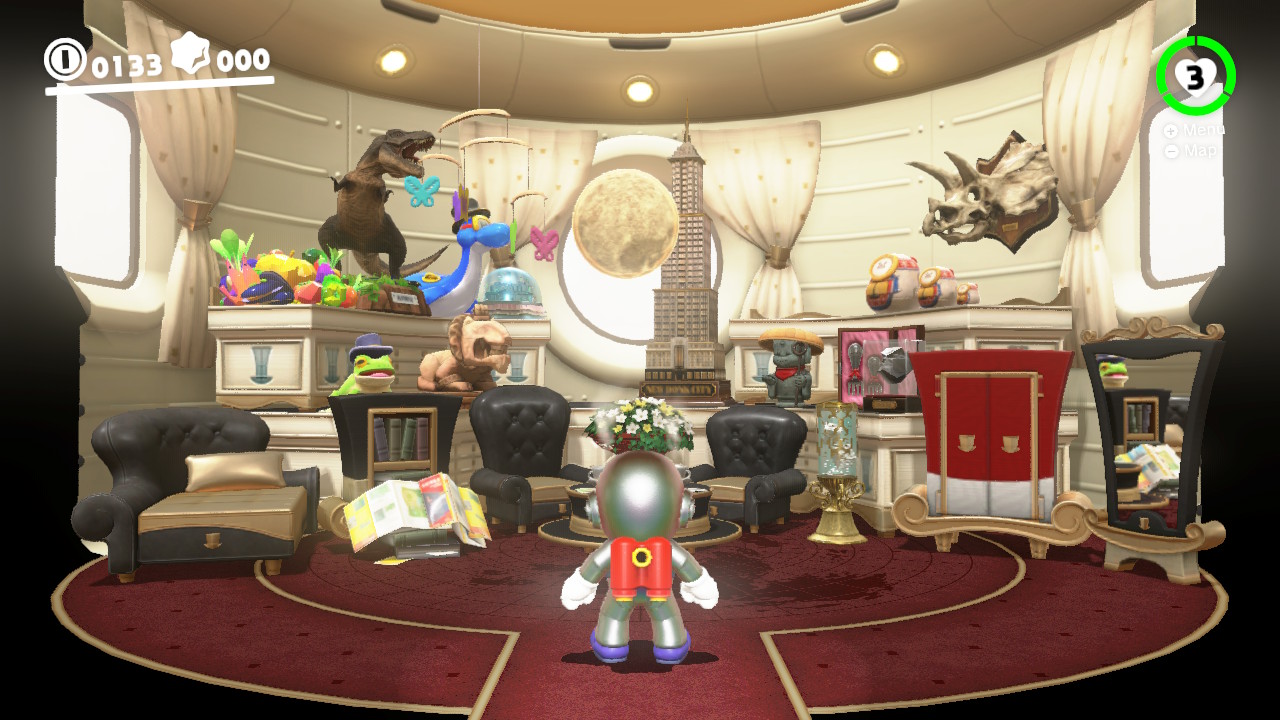
A Nuzlocke mode is meant to make a playthrough of any Pokémon game more challenging by adding some restrictions to play. There are three main rules to a Nuzlocke challenge:

  1. You can only catch the first Pokémon you meet on a new route or area (cave, forest, etc.). If you fail to catch that Pokémon, you can not catch another one for that area.
  2. If a Pokémon faints, it is considered dead and must be released, never to be used again.
  3. Every Pokémon you catch must be nicknamed.

Due to these restrictions, it is actually possible to get a game over in a Pokémon game if you have a team wipe and have no more backup Pokémon to use in battle. Other rules can be applied to main ones too, like only using Pokémon Centers a limited number of times or not at all. I play my Nuzlocke runs with two additional rules being no healing items in battles and no catching duplicate Pokémon. Adding a little more difficulty to a game series I know like the back of my hand was the main reason I decided to do my first ever Nuzlocke run with LeafGreen. The reason I ended up loving the format, however, was because of how it recontextualized the entire game and made me appreciate the series on a deeper level.

When you first wander out into the Pokémon world, be it Kanto, Johto, Galar, or any other region, there is an excitement to every new route. Playing the game regularly, you can catch as many Pokémon as you’d like, but in a Nuzlocke the first Pokémon to appear will be your new friend and teammate. It’s the same type of excitement one gets from opening booster packs of trading cards. You might get a rare pull like a 4% chance to spawn a Ralts, or just another Rattata. But this randomness also forces players to build usual teams and use Pokémon they may have overlooked in the past. For my most recent Nuzlocke, I played Pokémon Sword and caught a Vanillite early on. I would never have thought to put one on my team before because I always prefer dual-type Pokémon, but my Vanillite, named Minnesota, became a staple of my team. They were with me from the first gym all the way to defeating the champion. 

The rule forcing players to nickname their Pokémon also helps deepen the affection felt towards them. It wasn’t just any Vanillite fighting, it was my Minnesota. The nicknames help differentiate them from other Pokémon and lets the player create little personalities for them too. I had a Mudsdale named Pokey and they were an absolute beast. With high attack and defense, they could dish out pain and take it in turn, especially with their ability Stamina, which raised their defense everytime they took damage. They were the wall that I depended on in so many battles and they couldn’t be stopped. At least until we came across a Durant with Guillotine, a 1 hit KO move with a 30% hit rate. One unlucky role of the dice later and my Pokey was gone.

It can be absolutely heartbreaking to lose a Pokémon in a Nuzlocke challenge. To prevent this, you will have to fight hard and get creative. Even though you have little control over what Pokémon you are able to catch, you do options of what moves they can learn. One of the best things that the later games in the series did was make TMs (items that allow you to teach a Pokémon a certain move instantly) reusable. This allows the player to experiment with the moveset of a Pokémon because they don’t have to worry about wasting the TM on the wrong Pokémon, or, in the case of a Nuzlocke run, one that dies later one.

Experimentation and type coverage with moves is crucial in a Nuzlocke challenge where you may not be able to craft your team to cover all 18 different types effectively. It becomes quickly apparent that doing super effective damage is better than STAB (Same Type Attack Bonus) damage. If you can’t knock an opposing Pokémon down quickly, it just gives it more time to do damage and possibly surprise you with a super effective attack that you may not have seen coming. During my last Nuzlocke, I had a Perrserker named Randy Moss that I taught Thunder to for water and flying coverage. It was a weird choice and one I would never have thought of unless I had to find a way to deal with gaps in my team composition. 

While there is always some strategy involved in Pokémon, when you turn each batte into a life or death struggle, you have to think much harder about your decisions. I went into the championship with only four Pokémon: a Haxorus named Battleaxe, a Golisopod named Wimberdon, a Musharna named Piglett, and my Vanilluxe, Minnesota. All I remembered about the finals from my previous playthrough was the dragon leader had a pain-in-ass steel/dragon type Duraludon and that Leon had a rather scary Charizard. So I had to get creative again. Wimberdon was given Brick Break to contend with the Duraludon and Battleaxe learned Rock Throw to help deal with Leon’s Charizard. I knew that the dragon leader’s Pokémon revolved around changing the weather to benefit his team, so I used Vanilluxe’s ability Snow Warning and the attack Hail to keep the weather tilted out of his favor. This also gave Vanilluxe’s strongest attack, Blizzard, a 100% hit rate instead of 70%.

These examples are why I enjoy the Nuzlocke format of playing Pokémon so much. I have always loved the series, but I learn more about its complexities with each different Nuzlocke run. First, I learned the type advantages beyond the basic fire beats grass which beats water. Next, I learned the real difference between basic and special attack/defense and which Pokémon should specialize in which. Then there was changing up moveset for type coverage, different strategies for dealing with tricky opponents, and deeper and deeper Scorbunny hole goes

I cannot stress enough how much I love this method of playing Pokémon. The Nuzlocke challenge changes a simple and already immensely fun series into a nail-biting endeavour for veteran players with higher stakes, more to gamble with risky plays, and an emotional investment in the little creatures battling for you, with a razor’s edge between crushing defeat and soaring victories. It is a great way to explore the depths of the Pokémon series. If you are like me and are beyond a casual player of the series but not interested in breeding and training a competitive team, I highly suggest giving a Nuzlocke run a try and see what new it teaches you. Just don’t come crying to me when you lose your favorite Pokémon.

Star Fox 64 – Critical Miss #18

Captains Log. Star date: 1997

In 1997, I was 7 years old. I liked video games, but I hadn’t hit my first wave of love with the medium. That would come in the next couple years with the release of Pokemon Red & Blue and Digimon World. I was only slightly aware a thing called the Nintendo 64 existed at the time. The only person I knew with one was my older brother’s friend and they didn’t like having a kid brother tagging along with them much. This means I missed out on the Nintendo games of the time. I got to try a few like Mario 64, Pokemon Stadium, and GoldenEye 007, but many I didn’t even know existed until much later in life. Like Star Fox 64 released in 1997, a game I never heard about until YouTube game reviewers became a thing. All of them praised the game for being a classic and, when I found a copy of the 3DS version on sale, I wanted to try it for myself.

The story of Star Fox 64 is a Nintendo classic. A bad guy (Andross) is doing bad things and it’s up to the good guys (the Star Fox team) to stop him (shoot him with lasers). Small level introductions to give context for what you are doing at any giving time. The Star Fox team is composed of Fox McCloud, Slippy Toad, Peppy Hare, and Falco Lombardi. You will see these characters throughout the levels as they pop up on Fox’s comms device where they can offer tips and tricks, but most often will just yell for help. It’s these small moments that show the characters’ personalities. Slippy always needs help, Falco is a cocky asshole, and Peppy knew Fox’s dad and not much else.

The presentation is solid and has the polish expected from a Nintendo game. While the 3DS version has better graphics across the board, the level design and structure was built around simple geometry that was possible on the N64 and it still works today. Nothing about the levels felt old school or dated like a lot of other 5th generation games tend feel today. The music takes obvious inspiration from sci-fi epics like Star Wars and the compositions are amazing, with songs being able to feel epic and soaring while still only using electronic instruments. 

There are minor changes between the N64 to the 3DS versions of Star Fox 64. The 3DS version allows players to use motion controls to aim their sights, which I didn’t use, cut scenes can be skipped after viewing once, and there was a score attack mode added to let players play any level to try to get the best score. Overall, the based game itself is the same in both versions with gameplay being untouched. Which is good for someone like me, where gameplay is the most important aspect of video games.

Controlling Fox as you pilot different vehicles across planets, nebulas, and space stations all while blasting enemies with lasers and narrowing maneuvering through gaps and around obstacles is thrilling. Levels are broken up into on-rail or all-range modes. All-range mode means you are free to pilot your Arwing freely with 360 degrees of movement in any direction. This seems pretty standard until you realize most of the game’s levels are on-rail style, with one path that your ship can head down and your main concern is blowing up enemies and avoiding collisions with the environment. Star Fox 64 is almost a straight reimagining of old arcade shoot em ups like Galaxian or Gradius in 3D in these on-rail levels where enemies emerge and attack in set patterns. Even the levels are quick and action packed like the arcade games, usually only lasting a few minutes at most. Another thing it has in common with those old arcade games is replayability.

When booting up the game, the player is met with the Lylat System, a small solar system with a handful of planets, a sun, an asteroid belt, and some nebulas. A natural first playthrough will see the player just beating the levels and moving on to the next, but this will lock them out of over half the levels. That’s because each level has a secret path that can be found. Sometimes the missions are stated directly by a member of the Star Fox team, like shooting the train switches in Macbeth. Other times, the secret goal is kept hidden from the player, like getting a high enough score in Sector Y or flying through land rings in the Corneria. These additional objectives are great because they encourage exploration and replayability to find, but they also date the game in an interesting way.

I remember those Wild Western days of 90’s video games. The internet was not nearly as ubiquitous as it is today, meaning secrets in games were not a simple Google search away. Often, you had to rely on friends who might have found them or gaming magazines like Nintendo Power to give hints of what were hidden in the games you played. You probably did not have as many games to play either, lacking disposable income and needing people to buy them for you. It’s in this era where replayability in games was extremely valuable. Playing the same game, or the same section of a game, for hours was common as you slowly peeled away at it. And Star Fox 64 is very much a game of this era. Especially with a lot of the hidden objectives being rather obtuse, it’s easy to imagine kids of the late 90’s spending hours trying to discover everything the game had to offer, eyes glued to a CRT TV, weird M-shaped N64 controller clutched in their hands.

Exploring levels and finding secrets also helps you find power ups. These are additional ammo for your bombs, upgrades to your lasers, and gold rings, collecting three of which will extend your health bar and every three after that gives you a 1 up. These powers up are vital to succeeding at level, most notable Venom 2, the hard version of the last level. This is an all-range level where you must fight it out with Star Wolf, a rival team of mercenaries hired by Andross. It is easily the hardest level in the game, but if you don’t have the full Star Fox team backing you up or fully upgraded levels and health, it is nearly impossible to win. Star Wolf are very quick to evade or shield when shooting at them, so if you are lacking in fire power, your DPS will not be high enough to get ahead of the damage done to you and your teammates. And once all your teammates are down, all of Star Wolf tail you mercilessly, constantly pelting you with lasers and scattering when you u-turn, only to end up behind you again. This level took way more tries than it should have for me to finish and had me swearing into my 3DS the entire time.

Nothing else in Star Fox 64 frustrated me to the extent of Venom 2, but the Landmaster and Blue Marine levels did annoy me. Together, they only make up 3 stages, but they are both so slow, with the Landmaster being a tank and the Blue Marine being a submarine, and both being similar yet different enough from controlling like the Arwing that I wish they would have been replaced with more fast-paced, exhilarating flight levels. The Blue Marine level, Aquas, feels especially pointless. It is the only level with the Blue Marine, which controls exactly like the Arwing but half as slow, and the level is just dark, dank, and unappealing. I would have preferred this level to at least be another Landmaster level and give that playstyle more room to explore ideas. The differing vehicles are meant to add variety, but they control so similarly to the Arwing and are utilized in so few levels, that they never feel fully realized or interesting.

Star Fox 64 is a fun game and rightfully regarded as a classic of the N64. With tight gameplay and an emphasis on replayability, it’s no wonder it is still remembered fondly today. But I’m not sure I would highly recommend it to a modern player. I just can’t see someone going in blind and dedicating the time to find all the hidden paths. Even if they do go through all the different routes, it is still a very short game. You can see everything it has in only a few hours. But maybe that’s a selling point to some. The least I can say is that it’s an interesting little time capsule of the design mentalities of the 5th generation of games, floating cold in space, ready to be cracked open and explored again.